
AI SEO in Singapore refers to an umbrella term for several strategies, which include answer engine optimisation (AEO), generative engine optimisation (GEO), visibility through AI assistants, and the use of AI for traditional SEO services. The strategies mentioned above have some similarities, but they do not refer to the same process.
That distinction matters because two companies can provide “AI SEO” as their services, offering something totally different to their clients. One may simply use AI for keyword research and content creation, while the other may specialise in making sure that the company is visible among AI-generated answers.
This guide explains what AI SEO Singapore really means, why AEO is different from GEO, what role ChatGPT, Perplexity, Gemini, and Google AI Overviews play, and what you should expect from an AI SEO scope.
Why Is AI SEO Terminology So Confusing?
The terminology around AI SEO is still inconsistent. Different providers can use the same label in their offerings to describe quite different activities, making it hard for a company to grasp what exactly it is getting.
Some services use AI technologies in order to speed up traditional SEO activities, such as research, analysis of content, or automation of workflows. Others focus on visibility among AI reviews and search experience. Both types are interconnected, but address different challenges.
The distinction matters commercially. In analysing an AI SEO offer, a business should be able to identify what is being optimised, where the visibility is expected to appear, and how performance will be measured.
This article separates those concepts so that businesses can understand what an AI SEO in Singapore service actually includes rather than relying on the label alone.
What Does AI SEO Actually Cover?
AI SEO is better understood as an umbrella term than a single strategy. AI SEO may encompass optimising your website for AI searches, enhancing how information can be processed and delivered to users through answer engines, and employing AI technology to perform conventional SEO tasks.
Optimising for AI-Generated Answers
One aspect of Singapore AI SEO relates to how a business appears when users ask questions via AI-powered searches. This aspect includes clear responses, strong entity data, properly structured content, and reliable sources.
This is different from simply trying to rank a webpage in a conventional search result. In some cases, it may be sufficient to have a business, source, product, or any other piece of information referenced in AI-powered responses.
Using AI to Improve SEO Work
It is also possible to use AI in the background to aid traditional SEO. For example, AI can aid in analysing a lot of data, spotting opportunities for content, doing research, or handling content workflows.
That is AI for SEO, not SEO for AI search engine results. This is an important difference since it is possible to have a high level of usage of AI while providing basically the same SEO service.
Why Does the Distinction Matter?
In analysing an AI-driven SEO service in Singapore, consider the deliverable involved. If the service primarily involves the delivery of speed in research, content creation, and analysis, then AI is merely a means of execution.
If the service involves visibility in answer engines, generative search, and AI-generated responses, then its application is more comprehensive. The awareness of this distinction goes a long way in comparing AI SEO services.
What Is AEO (Answer Engine Optimisation)?

AEO (Answer Engine Optimisation) is a process that revolves around making the information easier to understand, extract, and use when responding to users’ questions. Unlike search result position optimisation, the goal is to present the information in such a manner that makes it clear enough for generating an answer directly.
What Does AEO Involve?
A practical AEO Singapore strategy can involve several demands:
- Answer-oriented content: Information in the form of a reply to a particular question instead of burying the answers inside a longer passage.
- Entities: It should be easy to understand what the business does and what its products or services are about.
- Structuring of information: Proper structuring of information along with using schema where applicable.
- Credibility of information: Backing the information with reliable data as well as demonstrating expertise.
It is not necessary to make all pages a set of short answers. Effective AEO also involves comprehensive and valuable information.
What Doesn’t AEO Involve?
AEO is not a quick route to getting included in an answer engine. Putting in some FAQs or adding questions as headings is not enough to establish a website as an authority.
Nor does it entail a substitution of traditional SEO. Having a technically accessible site with relevant and properly structured content continues to be a crucial basis for search success.
What Is GEO (Generative Engine Optimisation)?

GEO (Generative Engine Optimisation) focuses on increasing the chances that the business, brand, product, or source is well-represented in the context of a generative search experience. Where AEO is about making content answer-ready, GEO is about how information will be interpreted and integrated into the AI response. The difference is important as generative systems can generate a response by synthesising information from various sources, unlike in traditional search engines where only a list of webpages is displayed.
How Is GEO Different From AEO?
The two approaches overlap, but their emphasis is different.
AEO focuses on short, clear, answer-focused information accessible to systems that respond directly to questions.
GEO helps generate broader experience, including whether a business or source is recognised as relevant enough to be represented in an AI-generated response.
Thus, the strategy of GEO is not only about more questions and answers. It must focus on clarity, validity, and consistency of information too.
What Does GEO Mean for a Singapore Business?
A company that targets customers from Singapore may find GEO useful when potential clients start to take part in generative searches in order to research companies, services, products or solutions.
Generative search visibility is more about how consistently and accurately you appear, as compared to traditional SEO rankings, which have a fixed position to follow. The aim is to organise your company’s information, services, credentials, locations, pricing information, etc. in a way that AI tools can interpret and utilise them properly to answer questions.
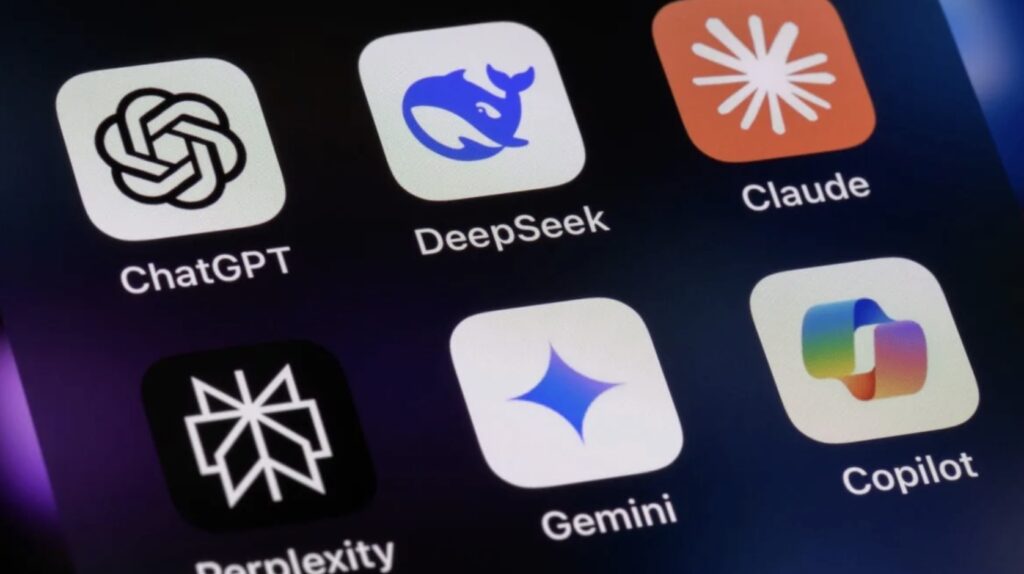
How Do ChatGPT, Perplexity, Gemini and Copilot Affect AI SEO?
AI-powered assistants can be another way for people to research businesses, products, and services. For a small Singapore business, the win isn’t a ranking; it’s about how accurately the assistant describes you when someone asks it a relevant question.
No agency can guarantee a citation from ChatGPT or Perplexity — the underlying models change too often for that kind of promise.
ChatGPT
ChatGPT can be relevant when customers use conversational queries to find out more about the business, service, product, or recommendations. For the business, that means keeping its website, listings, and reviews accurate and up to date, since ChatGPT often pulls from those sources. A B2B consultancy fielding research-style questions may benefit more from ChatGPT visibility than, say, a neighbourhood bakery.
Perplexity
Since Perplexity cites its sources directly, it’s more appropriate for businesses that run on a research basis, such as fintech, healthcare, or professional services, where being quoted alongside credible sources matters.
For customers like researchers, analysts or professionals who do fact-checking before purchasing, this Perplexity visibility could be worth it; otherwise, a retail brand might not be getting much return from it.
Gemini
Gemini’s integration with Google Search and Workspace means it can shape how people research a business right alongside a regular Google search. Instead of attempting to outsmart Gemini’s performance, prioritise creating engaging, informative, and well-researched material that it can easily deliver.
Microsoft Copilot
For B2B companies whose customers research vendors inside Microsoft 365 applications (such as Word, Outlook, or Teams), Copilot can be the most significant advantage.
However, not all Singapore SMEs need to prioritise every assistant. The scope of work should identify which platforms actually matter to the business’s audience rather than including each AI assistant just to make the project seem more comprehensive.
The dedicated resources on getting cited by ChatGPT and ChatGPT brand visibility in Singapore may refer to the specialised resources available for that purpose.
What Does Google AI Overview Visibility Mean?
Google AI Overview visibility refers to a business or a website’s presence in Google’s AI-generated summary for any particular search. In the context of an AI SEO campaign, this can be considered a measure of visibility success, instead of traditional search rankings.
It is also necessary for a business to check its presence in the relevant AI Overviews, frequency of presence, and whether the appearance is associated with important queries.
What Should an AI SEO Scope Include?
If AI Overview visibility is part of the service, the scope should clearly state:
- Which queries are being monitored
- What baseline visibility exists
- How appearances or citations will be recorded
- How often visibility will be reviewed
- What other organic-search signals will be considered alongside AI visibility
The important point is transparency. An agency should not present an AI Overview position as though it were a fixed traditional ranking that it can guarantee.
SEO vs AEO vs GEO: What’s the Difference?
SEO, AEO, and GEO are connected, but they refer to different types of optimisations. This trio cannot be considered three entirely independent alternatives to each other. Conventional SEO is still crucial, while AEO and GEO are broader perspectives on search.
| SEO | AEO | GEO | |
| What it optimises for | Organic search visibility | Direct answers and answer-engine visibility | Representation in generative AI responses |
| Where results appear | Traditional search results | Answer engines and direct-answer experiences | Generative search and AI-generated responses |
| How it is measured | Rankings, organic traffic, conversions | Answer visibility and relevant appearances | Mentions, citations, visibility and referral signals |
| Typical focus | Technical health, content, relevance and authority | Clear answers, entities, structure and credibility | Generative visibility, source relevance and broader information signals |
| Who it can suit | Businesses competing for organic search demand | Businesses whose audiences ask research-based questions | Businesses whose customers increasingly use generative AI for discovery |
Are SEO, AEO and GEO Alternatives?
Not necessarily. There is no inherent contradiction between a business’s interest in AEO and/or GEO and sticking with the former SEO.
The difference lies in what context the information should be available in and when success is measured. For instance, a business from Singapore can work on a page related to its service both from the perspective of SEO and making it understandable for answer and generative search engines.
This is why SEO vs GEO or AEO vs GEO should be considered an objective comparison and not an automatic replacement of one strategy by another.
How Much Does AI SEO Cost in Singapore?
The cost of AI SEO services in Singapore varies depending on the scope of what is actually included. There are some companies that provide AI-driven optimisation as an added service on top of regular SEO, whereas others package it separately as part of a larger SEO contract.
The important question is not simply how much AI SEO costs, but what the fee changes in terms of actual deliverables.
What Should the Scope Define?
A credible proposal should make clear whether the work covers:
- AI visibility monitoring
- Specific AI search or assistant environments
- Query and topic tracking
- Content or entity optimisation
- Reporting and analysis
- Ongoing optimisation
Where AI SEO services Singapore becomes a new line on the invoice while deliverables have not changed, the labelling itself does not prove that a new service is being offered.
The company should therefore focus more on the scope of the work rather than only the price per month. Regarding specific questions of pricing, you can visit the SEO pricing page.
How Should You Buy AI SEO?
The crucial point when analysing the scope of an AI SEO project is to identify exactly what is being optimised and how the work will be evaluated.
The credible scope should make four points clear.
Which AI environments will be targeted?
The proposal should identify whether it focuses on – whether it is AI Overviews, ChatGPT, Perplexity, Gemini or any other environments.
What queries/topics will be monitored?
AI visibility needs to be linked to specific search queries, topics or business areas and not considered as an abstract aim.
What is the initial baseline?
In order to be able to measure the difference, the client should have knowledge about existing visibility before the work even starts.
What will be tracked/monitored/decided?
This part needs to provide information about what will be measured, how often it will review the results, and what decisions will follow from those findings.
It’s much better than just putting “AI SEO” as part of your existing proposal. If the service is genuinely new, it needs to demonstrate what additional work is being performed and what additional visibility is being assessed.
How Do You Know AI SEO Is Working?
Measuring AI SEO is much more complex than assessing traditional keyword placement because AI-assisted answers do not give us a universal ranking algorithm. The visibility of the answer may depend on different aspects, including the type of question, platform, etc.
A useful measurement process therefore looks at several signals together rather than promising a single “AI ranking.”
Citation and Mention Visibility
It is necessary to evaluate whether the company, website, its products or services are mentioned in appropriate AI-generated answers. It is also necessary to see if there are any citations from the company’s website in the answers. The important point is consistency. One isolated appearance does not necessarily demonstrate meaningful visibility.
Share of Voice in AI Answers
For a specified set of queries, the agency can measure how often the company shows up relative to other organisations or sources. This gives the client a more useful insight into whether AI visibility is growing in those areas that matter for business purposes.
Branded Query Lift
A shift in the number of branded searches may be yet another indicator to support the hypothesis. An increase in the number of searches for a specific business or brand after improvements in visibility can indicate raised awareness. However, branded query shifts are not necessarily an effect of AI SEO only.
Referral Traffic From AI Platforms
Referral traffic from AI assistants can tell us if visibility translates to visits. The value of this type of traffic varies based on the AI platform used, the audience and the intent behind the visit. In some cases, a little bit of very specific referral traffic can be worth much more than a lot of irrelevant traffic.
What Cannot Be Measured Precisely Yet?
Every AI visibility results do not always translate into an easily quantifiable ranking number. If an organisation guarantees a specific rank, then it needs to make clear how that is being measured.
It should set a benchmark for itself, define the searches and platforms that it is tracking, note down all its relevant mentions, and explain what the data says—and does not say.
Frequently Asked Questions
What Is AI SEO?
AI SEO involves the optimisation of AI-powered search and answering experiences such as AEO, GEO, Assistant Presence, and AI Overviews. In addition, it may entail the application of AI to aid in traditional SEO activities.
What Is AEO (Answer Engine Optimisation)?
AEO focuses on the facilitation of easy comprehension and usage by answer engines in their responses. It can involve direct answers, entities, structured data, and authoritative sources.
What Is GEO (Generative Engine Optimisation)?
GEO involves studying how the business, brand, product, and sources are presented within the generative AI responses. GEO is similar to AEO but deals with the entire experience of generative searches.
What Is the Difference Between SEO, AEO and GEO?
SEO emphasises organic searchability, AEO stresses the direct-answer experiences, while GEO concerns itself with generative AI answers.
How Is AI Changing SEO?
AI is transforming both how people search for information and how SEO professionals perform research and analysis. Organisations must consider search, answer engines, and generative AI experiences.
How Do I Get My Business Cited by ChatGPT?
There is no foolproof method of getting a mention from ChatGPT. Businesses can focus on clear, quality information and credible sources, then check whether they show up for the relevant searches.
How Much Does AI SEO Cost in Singapore?
The cost of AI SEO depends on the scope. It may be an add-on to other services, or a stand-alone service. What matters is the deliverables rather than the label alone.
Do I Need AI SEO If My Normal SEO Is Working?
Not necessarily. There should be something unique about the AI SEO that differentiates it from regular SEO, and it only makes sense where AI-powered search is a valuable discovery process for your target customers.
Closing: Is AI SEO Worth Considering?
AI SEO is not one fixed service. It can include AEO, GEO, Assistant Visibility, AI Overview Visibility and AI-assisted SEO services based on the business needs. The important step is to look beyond the label. The true scope of AI SEO must clearly state its focus areas, relevant queries, relevant platforms, deliverables, and visibility measurement.
For a Singapore business, AI SEO should complement—not automatically replace—strong conventional SEO. The best approach is the one that connects emerging search behaviour with a clear business objective and measurable work.
About The Director
Notable Achievements

Struggling to Attract More Traffic?
Let us help! We provide various digital marketing services that can easily rank your website on the first page of Google such as:
Allow your website to be seen by more users by scheduling an appointment with us today!